







This story first appeared in Power Shift, The Yappie's weekly newsletter on national AAPI power, politics, and influence. Subscribe for free here.
Do you remember the first time you encountered a piece of Asian American history in a museum? Maybe it was a sign protesting the gentrification of San Francisco’s Manilatown. Or a letter from a Japanese American soldier deployed overseas with the 442nd Regimental Combat Team during World War II.
These types of archival materials, each a timestamp for key periods in Asian American history, could soon be lost forever, AAPI advocates warn.
What’s happening: The National Archives’ (NARA) move to close its Bay Area facility, located in San Bruno, has sparked alarm that the more than 100,000 cubic feet of records housed there will become damaged, destroyed, or inaccessible.
- An email to staff obtained by KQED said the agency plans to redistribute the materials across six other NARA facilities within two to three years in an effort to improve “efficiency and effectiveness,” but Democratic lawmakers and historians say it will significantly hamper public access to one-of-a-kind records.
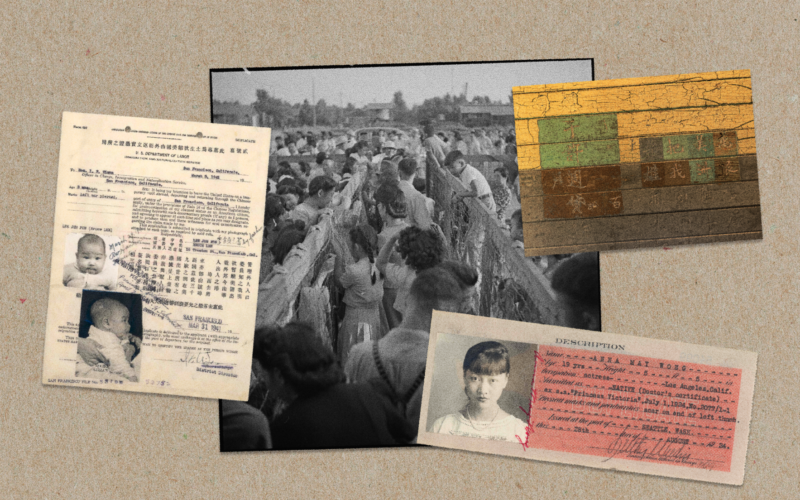
The San Bruno building is home to collections spanning the Chinese Exclusion Act, Angel Island immigration, and Japanese American incarceration.
- “For so many of our constituents, it holds the story of their family’s history,” states a letter from 37 Congress members urging NARA to reconsider.
- It also houses “precious records that tell AANHPI stories that are often overlooked,” Rep. Judy Chu (D-Calif.), who co-led the letter with Rep. Kevin Mullin (D-Calif.), said in an X post.
- Prominent documents include court records for United States v. Wong Kim Ark, a landmark Supreme Court case that established birthright citizenship.
The context: Though it’s not the first time NARA has closed a facility, in this case, there were no public hearings before the decision was announced, NBC News reports.
- “They did this with no public input and no transparency … and no congressional oversight,” Mullin said at an August rally.
- NARA did not respond to The Yappie’s request for comment.
While it’s unclear if NARA will respond to their concerns, Chu and several other lawmakers, including Sen. Tammy Duckworth (D-Ill.) and Rep. Pramila Jayapal (D-Wash.), have in the meantime introduced legislation requiring congressional approval before NARA can shutter or restrict access to regional facilities.
- The agency is set to begin transporting records “within the next few months,” according to the email to NARA staff.
Our take: In an era when people are trying to either erase or reposition the uglier parts of American history, preserving primary sources has become more vital than ever—especially when digitizing is often an expensive and years-long endeavor.
- The reality is that key parts of Asian American history could simply be lost to time as this process rolls out.
About The Yappie: The Yappie is an independent, nonprofit newsroom dedicated to tracking Asian American and Pacific Islander power, politics, and influence. Learn more at theyappie.com/about.