





This story first appeared in Power Shift, The Yappie's weekly newsletter on national AAPI power, politics, and influence. Subscribe for free here.
The Trump administration’s unprecedented move to sell a deep-sea mining lease off American Samoa is the latest chapter in the ongoing conflict over who gets final say over what goes on in and around U.S. territories.
What’s happening: Should the sale of the territory’s outer continental shelf take place as scheduled on Nov. 19, it will be the first deep-sea mining lease sale in U.S. history—in direct opposition to American Samoa’s decision to ban the practice in 2024.
- The Marine Minerals Administration (MMA), the federal agency overseeing the sale, has said that the minerals available in the seabed are a “a vital strategic asset in global competition, essential for reaching our energy efficiency goals, strengthening our national defense, and securing domestic supply chains,” per a final leasing notice published last week.
- While the 31 million acres of seabed located alongside the Rose Atoll Marine National Monument are technically federal waters, the sale announcement has reopened longstanding tensions over Samoans’ right to self-determination.
In their words: “We oppose deep sea mining with every fiber of our being,” Sabrina Suluai-Mahuka of the environmental organization Finafinau told Hawaii News Now. “It doesn’t make sense economically. It doesn’t make sense environmentally, definitely not culturally.”
- “It’s really a reflection of what democracy looks like for the territories,” Suluai-Mahuka added. “We are technically part of the U.S., but we don’t have any voting rights. Our consent is clearly not given in this process.”
- American Samoa’s governor and other local leaders similarly oppose the sale, Hawaii News Now notes.
The latest: A Samoan council of leaders, known as Faleula o le Manu’atele, has joined Fa’asao Amerika Samoa and Conservation Council for Hawai‘i to file a lawsuit through environmental law organization Earthjustice.
The complaint alleges that MMA lacks legal authority to sell these leases under treaty requirements that must be satisfied before any mineral leasing can happen in American Samoa.
- It also argues that the Outer Continental Shelf Lands Act doesn’t authorize mineral leasing in U.S. territories and that the sale contradicts MMA’s own regulations.
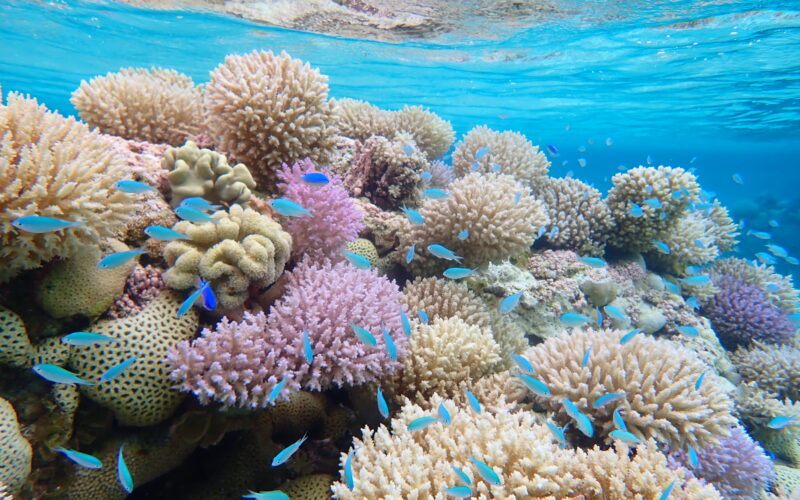
Reality check: Researchers warn that extracting minerals through deep-sea mining can release toxic and radioactive substances into ocean water, which could lead to public health problems and undermine the entire ecosystem, Oceanographic reports.
- Deep-sea mining also has the potential to cause harm not only to marine life but also to American Samoa’s fisheries and cultural traditions, according to the Natural Resources Defense Council. The collateral could threaten the territory’s ability to feed local communities and sustain its economy, experts say.
What’s next: Whoever wins the bid will be authorized to carry out preliminary mapping activities; a regulatory process will be finalized before a company can begin full-scale commercial harvesting, according to the MMA notice.
Our take: Consider the freshwater contamination from the U.S. Navy Red Hill fuel leak in Hawai‘i, the Air Force’s disposal of hazardous waste at Tarague Beach in Guam, or decades of nuclear weapons testing in the Marshall Islands.
- Throughout these incidents, the central question—who, exactly, holds the jurisdiction to decide what happens to Native Hawaiian and Pacific Islander homelands?—has remained a matter of litigation. Given the U.S. government’s track record, it’s unlikely to be resolved anytime soon.
About The Yappie: The Yappie is an independent, nonprofit newsroom dedicated to tracking Asian American and Pacific Islander power, politics, and influence. Learn more at theyappie.com/about.