







Good morning, and welcome to The Yappie’s AAPI politics briefing — your guide to the policy news and activism affecting Asian Americans + Pacific Islanders. Send tips and feedback to editors@theyappie.com and support our work by making a donation.
— Edited by Shawna Chen
The Biden Era
NEW SUPPORT FOR PACIFIC ISLAND NATIONS: The White House has released a fact sheet detailing the U.S.’ efforts to provide economic and diplomatic assistance to Small Island Developing States (SIDS).
- SIDS are located in regions of strategic interest to the U.S., such as the Indo-Pacific, Africa, and the Caribbean, and include the Freely Associated States—the Marshall Islands, the Federated States of Micronesia, and Palau—which the U.S. continues to provide financial aid to in exchange for exclusive military access through the Compacts of Free Association (COFA).
- Because climate change disproportionately affects SIDS, leading sea level rise, extreme weather, and other climate-related events, the U.S. aims to dedicate more than $27 million to investments such as early warning systems and clean energy infrastructure for SIDS, the fact sheet states.
- 7 in 10 AAPI adults believe that the U.S. federal government has a significant responsibility to address climate change, according to an April survey by AAPI Data/AP-NORC. 75% of Asian Americans surveyed in 2022 consider climate change to be “extremely important” or “very important” when voting, and Asian American activists continue to try to mobilize AAPI communities to prioritize environmental justice.
BIDEN ANNOUNCES CITIZENSHIP PATHWAY FOR SOME UNDOCUMENTED PEOPLE: A new proposal announced by President Joe Biden aims to make green cards easier to obtain for hundreds of thousands of undocumented immigrants who are legally married to or the children of U.S. citizens.
- Roughly half a million immigrants without authorization, as well as 50,000 people under 21 whose parent is married to a U.S. citizen, will be eligible to apply for legal permanent status and three-year work permits without having to leave the country, Seung Min Kim reports for the Associated Press.
- Yes, but: Applicants must prove that they’ve lived in the U.S. for at least 10 years prior to June 17, 2024 and that they are legally wedded to a citizen. They also can’t have prior deportations in their record, Axios’ Astrid Galván notes.
SUPREME COURT UPHOLDS ACCESS TO ABORTION MEDICATION: The U.S. Supreme Court rejected an attempt by anti-abortion groups to roll back access to the abortion pill mifepristone. The degree of availability still depends on state laws regarding its prescription and mail delivery.
- A 2024 report by the Pew Research Center found that 76% of English-speaking Asian Americans feel abortion should be legal in all or most cases, the highest among all of the ethnic groups surveyed.
- “While today’s decision is good news, it is absurd this case was ever considered by the highest court in the nation,” executive director of the National Asian Pacific American Women’s Forum Sung Yeon Choimorrow said in a press release. “We expect that, regardless of the outcome of this case, [anti-abortion] efforts will continue.”
ICYMI—WHITE HOUSE PROPOSES NEW ACTION TO RELIEVE MEDICAL DEBT: The Consumer Finance Protection Bureau announced a proposal for medical debt to no longer be included in credit scores, lifting barriers to applications for car, home, and business loans for millions of Americans.
- Despite the model minority myth surrounding AAPIs, about “16% hold some form of medical debt, but 50% have little to no confidence they could pay for an unexpected medical bill,” per a January survey by AAPI Data/AP-NORC. 78% think Congress should tackle health care costs as a priority.
- “Medical debt is a serious issue for all communities and disproportionately harms communities of color,” Juliet K. Choi, president and CEO of the Asian and Pacific Islander American Health Forum, said in a statement last year. “Language about Medical billing and accessing insurance can be particularly confusing for immigrant communities—and is more challenging for those that are limited English proficient.”
On The Hill
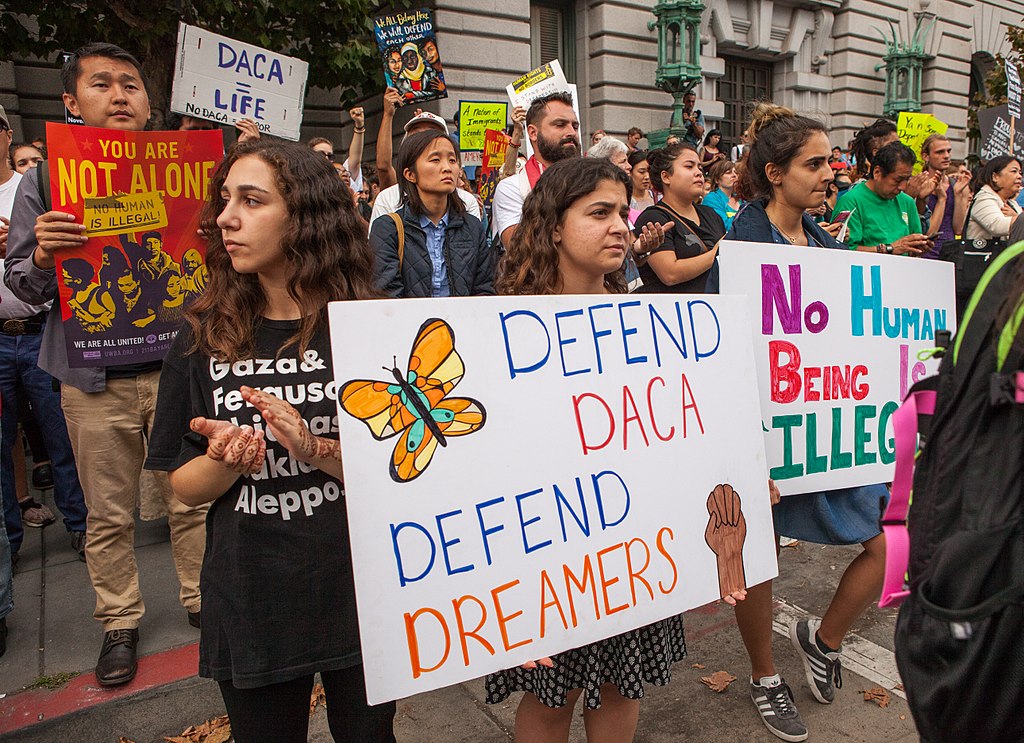
TWELVE YEARS OF DACA: June 15 marked the 12th anniversary of the Deferred Action for Childhood Arrivals, an Obama-era immigration program enacted to shield immigrants who came to the U.S. as children from deportation.
- While DACA recipients who received their deferred action status before 2021 remain protected and retain valid employment authorization documents, the U.S. District Court for the Southern District of Texas ruled in 2023 that no new applications can be processed amid an ongoing legal case challenging the program’s constitutionality.
- By the numbers: According to Pew Research Center, there are roughly 10.5 million undocumented immigrants in the United States. About 1.7 million are AAPIs, according to AAPI Data estimates, with over 14,000 protected under DACA.
- In support of DACA: In a statement issued by the Congressional Asian Pacific American Caucus, CAPAC chair Rep. Judy Chu (D-California) said that “many DACA recipients have faced threats to their legal status, citing major backlogs and processing delays in their applications for renewal. Many AAPI immigrant communities also face further obstacles, such as language and cultural barriers to accessing and applying for DACA.”
- In her words: “So as we recognize twelve years of DACA and its incredible impact, we must also recommit to pushing for permanent solutions … and fight for pathways to citizenship for all immigrants who call the United States home.”
EXPANDING FAIR LABOR STANDARDS FOR DOMESTIC WORKERS: Rep. Pramila Jayapal (D-Washington) and Sens. Kristen Gillibrand (D-New York) and Ben Ray Luján (D-New Mexico) re-introduced the National Domestic Workers Bill of Rights last week. The bill would extend common workplace protections to domestic workers in the country who are not protected under the Fair Labor Standards Act of 1938, which established a federal minimum wage and overtime protections.
- Domestic workers are broadly defined as workers employed by a private household, such as housekeepers, nannies, and house cleaners. They usually provide direct or indirect care services.
- The legislation would give these workers access to workplace standards such as overtime pay, guaranteed rest and meal breaks, and time off as well as protections against unsafe working conditions and harassment.
- A large percentage of domestic workers are foreign-born, and are oftentimes non-citizens who do not have the ability to work elsewhere. Over 56% of domestic workers are AAPI, Black, or Hispanic, according to the Economic Policy Institute.
- “Domestic workers make all other work possible, however too often they are called essential but treated as expendable,” Jayapal said in a statement. “This landmark legislation ensures that domestic workers are finally included in our existing labor laws.”
Campaign Watch

BIDEN’S $50 MILLION AD BUY: A new Biden campaign ad started running in swing states Monday with an emphasis on lambasting former President Donald Trump’s record as a “convicted criminal.”
- The ad is part of a $50 million spend through the month of June and targets Asian, Hispanic and Black voters in battleground states, Axios’ Hans Nichols reports. It debuted 10 days before Biden and Trump’s scheduled June 27 debate.
- In May, the Biden campaign also launched a smaller $14 million ad buy focused on Asian, Pacific Islander, Native Hawaiian Black and Latino voters, The Hill’s Alex Gangitano notes.
ASIAN IMMIGRANTS FACE OFF FOR SEAT IN QUEENS: Three Asian immigrant candidates are in the race to win a seat representing New York’s 40th district, which includes the majority-Asian Flushing, in the state Assembly.
- Incumbent Ron Kim, a Democrat, was first elected to the Legislature in 2012 and became the first Korean American to do so. His new opponents are two immigrants from China, Dao Yin and Yi Andy Chen.
- Both of Kim’s challengers argue that they are better suited to address constituents’ concerns, CBS News’ Elle McLogan writes.
- Yin has leaned on his background in finance, saying he aims to improve transportation in the district. Meanwhile, Chen has highlighted his established relationships with local organizations dedicated to improving schools and affordable housing.
???? Enjoying The Yappie? Make a donation, forward this briefing to a friend, or subscribe here. You can also follow us on Twitter, Instagram, and Facebook.
The Yappie is your must-read briefing on AAPI power, politics, and influence, fiscally sponsored by the Asian American Journalists Association. Make a donation, subscribe, and follow us on Twitter (@theyappie). Send tips and feedback to editors@theyappie.com.