







EDITOR'S NOTE
Welcome to the tenth installment of The Yappie’s series featuring Asian American and Pacific Islander (AAPI) newsmakers, rising candidates, and lawmakers.
Jodi Long’s journey through the corridors of entertainment has been nothing short of remarkable.
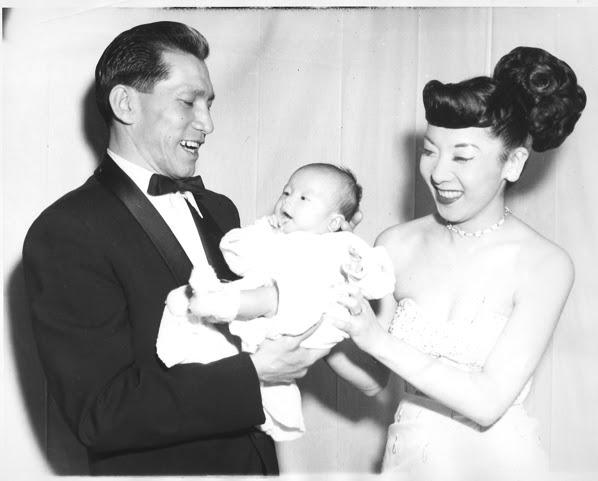
Her early foray into the spotlight began with her first Broadway appearance at the age of seven. “My parents were vaudevillians, and vaudeville was the beginning of the musical theater comedy in the 20s,” Long fondly recalls. She would travel with them as they hit the road performing in nightclubs from one coast to the other.
Raised amid the glittering lights of showbiz, Long’s upbringing provided a front-row seat to both the industry’s glamor and its grind. With a tap-dancing father and a showgirl mother, she witnessed firsthand the challenges faced by performers of color, particularly in an era marred by racial prejudice.
“I knew it was not going to be easy because I saw how hard it was for my parents,” she tells The Yappie, highlighting the adversity her family encountered in a racially charged environment.
Yet, it was this very upbringing that instilled in Long a sense of purpose and resilience in her childhood.
How it all started
Despite her family background, Long didn’t grow up wanting to go into acting. She’d gotten acceptance letters for both the Bronx High School of Science and the High School of Performing Arts in Manhattan (now the LaGuardia High School). At the time, she wanted to go into law. Deciding that she’d have a better shot graduating at the top of her class at the Bronx, she enrolled in the High School of Performing Arts.
“Then in junior year, I was cast as Deanie in ‘Splendor in the Grass,’” she said. “Once I did this part, I was hooked. I knew then I was going to be an actor.”
Determined to carve out her own path in the world of entertainment, she pivoted quickly to hone her skills. “If you’re going to do it, you have to learn your craft,” she recalls her father's advice, a mantra that would guide her through the highs and lows of her life.

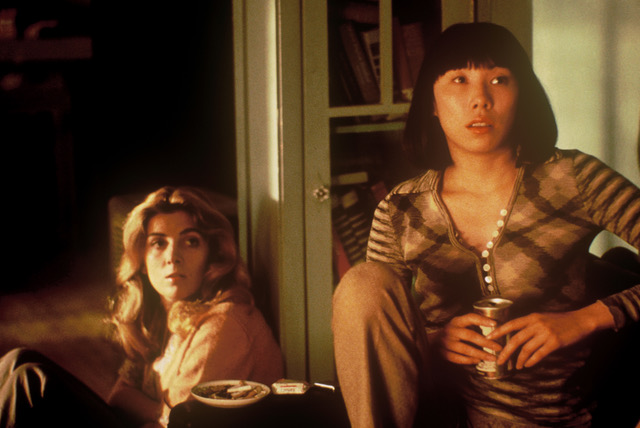
Despite early successes on Broadway, where she graced the stage in iconic productions such as “Kevin MacLean on Broadway” and “Fire Jim’s Song,” Long found herself confronting the pervasive stereotypes and limited opportunities afforded to Asian actors.
“Nobody really paid that much attention to me because I was just that Asian girl who was playing a role,” she notes.
Undeterred, Long set her sights on Hollywood, spurred by the encouragement of peers like George Takei and a steadfast belief in her own abilities. Soon, she landed her first TV role as a series regular in “Café Americain” and would later play Margaret Cho’s mom on the sitcom “All American Girl,” the first-ever TV show with a majority-Asian American cast on a broadcast network.
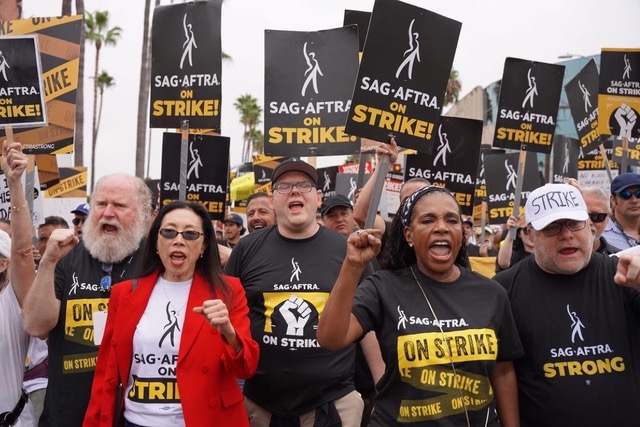
As her career took off, Long remained acutely aware of the broader issues that plague performers in the industry. Experiencing firsthand the obstacles actors—especially women and people of color—encountered, she developed a growing desire to advocate for change, a mission that would later lead her to join the Screen Actors Guild – American Federation of Television and Radio Artists, or the SAG-AFTRA union.
Leading change with SAG-AFTRA
One of the first things Long did as a union member was push to minimize ageism in casting—a form of discrimination that had often impacted her job opportunities.
“There were times I would walk into auditions, and it was clear they had already looked me up on IMDb,” which include actors’ birthdates in their listings, she says.
“I don’t look my age, and I knew that was holding me back. I would walk into a room and be surrounded by people who looked much older, and casting directors would ask, ‘What are you doing here? How old are you really?’”
She countered by advocating to remove actors’ birthdates from casting databases like IMDb.
Long also emerged as a vocal champion for performers’ rights, tackling issues ranging from health and pension benefits to the residuals payment system for current and future generations of actors.
After attending an unconscious bias workshop in 2008, she knew she needed to “get this to the rest of this industry,” she tells The Yappie, and soon pioneered trainings for SAG-AFTRA and the Producers Guild with a particular focus on its effects in the casting process, where she had firsthand experience dealing with biases about her ability to play certain characters.
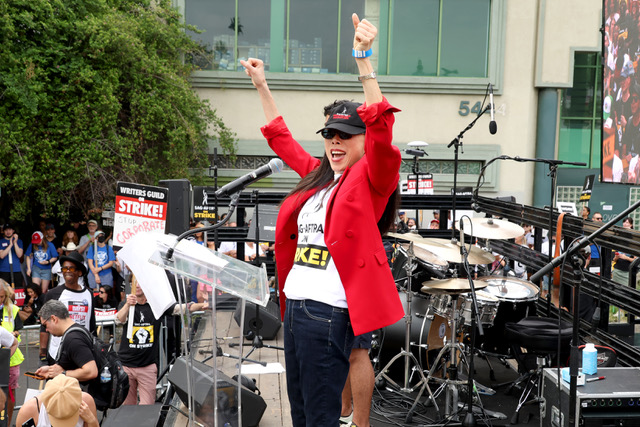
Her myriad roles with the union empowered her to run for president of the Los Angeles local chapter, which comprises nearly half of SAG-AFTRA’s entire 160,000 membership. She won with a landslide vote of 7,154 to 6,096 in September 2021.
“It was a very fractured union at the time with two political parties,” as Long remembers. “I thought, maybe I can change the narrative here.”
Indeed, it was during the SAG-AFTRA strike that Long's leadership and advocacy truly came to the fore. Faced with the daunting task of negotiating with industry executives and navigating the complexities of collective bargaining, she emerged as a steadfast voice for performers' rights. She also had to toe the line amid divisions within the union over the course of the 118-day strike.
“We can have different points of view within any organization, any union. We can play different notes. But we have to harmonize at some point. And that, I think, was our strength.”
Safeguarding against AI
As negotiations continued, the rise of AI and ChatGPT created new threats, and it was imperative for Long to ensure certain protections for actors.
She told The Yappie she herself had her full body digitally scanned during a 2020 film production—even though it wasn’t in her contract.
“I had this done. I’m sure a lot of other actors have this done as well. So now what happens to this digital scan/replica? Where is it? And what are they going to do with it?” she points out. “And let’s say they want to do a sequel or a prequel in 10 years … and I’m dead, what happens to that [scan]?”
This past May, discourse about people’s rights to their own personas sparked again after actress Scarlett Johansson accused OpenAI of modeling a chatbot on her voice without her consent. Though it denied using Johansson’s voice, OpenAI suspended use of the chatbot to address “questions about how we chose the voices in ChatGPT.”
For better or worse “AI is the future,” Long says, meaning SAG-AFTRA needs to take proactive measures to safeguard performers’ rights as the technology develops.
In November 2023, the union reached a deal with Hollywood studios that did include, among other guarantees, requiring consent for full body digital scans and entitling compensation for actors’ digital replicas. The union approved the three-year deal with a vote of 78.33% to 21.67% in December 2023.
Then, in August this year, SAG-AFTRA went on strike again—this time against video game companies.
It was authorized after more than 18 months of negotiations ended without a deal, according to Long. The employers had “rebuffed the union’s proposals for consent, compensation, and transparency around the use of AI—and instead countered with loophole-filled language that negated the protections they claimed to offer,” Long said. Yet dozens of companies began signing the union’s interim and tiered agreements following the strike announcement.
“I think it will become clear that workers’ rights and AI guardrails are good business and the companies that embrace this reality will thrive by doing the right thing for all,” Long tells The Yappie.
A more inclusive future
For Long, overcoming audiences’ unconscious biases about her identity became her “raison d'etre.”
“Many people see us one way. If they have unconscious bias, they just see ‘some Asian person over there,’” she notes. “If they’re really a racist, then they go, ‘Oh my god, that's the person who brought [COVID]’ whenever I walk out on a stage … a movie or television show.”
“My hope is that if you're really doing your job as a storyteller, in the end, they stop seeing the color of your skin or what your eyes look like,” she adds. “And they just see a human being.”
When asked to share her thoughts on AAPI representation in Hollywood, which many still find lacking despite recent acclaimed works like “Everything Everywhere All At Once” and “Past Lives,” Long emphasized the need to “keep reminding people of the importance of quality representation” for all underrepresented groups.
“Hollywood has become much more inclusive, but it still needs some work,” she added. “But I'm very proud of, for instance, when I look at the television and go, ‘There's an Asian girl and she’s playing a really good part in that show. And I don't even know who she is, but that's great she’s here.’”
As she continues to break stereotypes and challenge the status quo, one thing remains abundantly clear: Long’s indelible mark on the world of entertainment is matched only by her unwavering commitment to creating a more equitable future.
Her journey from a burgeoning actress into an inspiring leader among her peers is not just a personal narrative but a reflection of the broader struggles and triumphs of performers of color in an industry grappling with issues of representation and equity.
In an industry where visibility and representation matter, her legacy serves as a beacon to pave the way for future generations of AAPIs.