







At about 13%, Chinese nationals were the largest group to be granted asylum in the U.S. in 2022, the latest year for which data is available. It’s a statistic that surprised even filmmaker and C35 Films founder Yi Chen, whose documentary about Chinese dissidents in the U.S. debuted this year.
“When we think about asylum seekers, we usually don’t think about Chinese nationals,” she told The Yappie. “There’s a growing number of asylum seekers coming into the United States, and as the AAPI community … How do we engage them or build solidarity? I think it’s very relevant to the demographic changes and also as AAPI communities are becoming more diverse.”
Political opinion, of course, constitutes the basis for the majority of individuals granted asylum in the U.S.
Chen said she did not learn about any pro-democracy movements, including the 1989 Tiananmen Square massacre, while growing up in China. It was only upon attending graduate school at American University that she finally accessed information about the deadly demonstration.
Chen began filming in 2019 in hopes of finding out what the Tiananmen activists were up to three decades later. Her documentary “Dissidents,” which made its international premiere Friday at the Academy Awards-qualifying Doc Edge Festival, follows three exiled Chinese pro-democracy activists in the U.S. as they navigate threats of violence, criminal charges, and more.
These dissidents often face threats and harassment by Chinese government officials even once they have been forced to live abroad.
Many are forbidden from returning to the country and are stateless. While dissidents usually lose or have limited contact with their people in China, family members who remain there may still be targeted as a consequence of their actions.
“There’s so much risk in what they’re doing. They’re very public and they’re very brave,” Chen said. “I think what drew me to these three characters is [that] their democracy activism takes very different forms.”
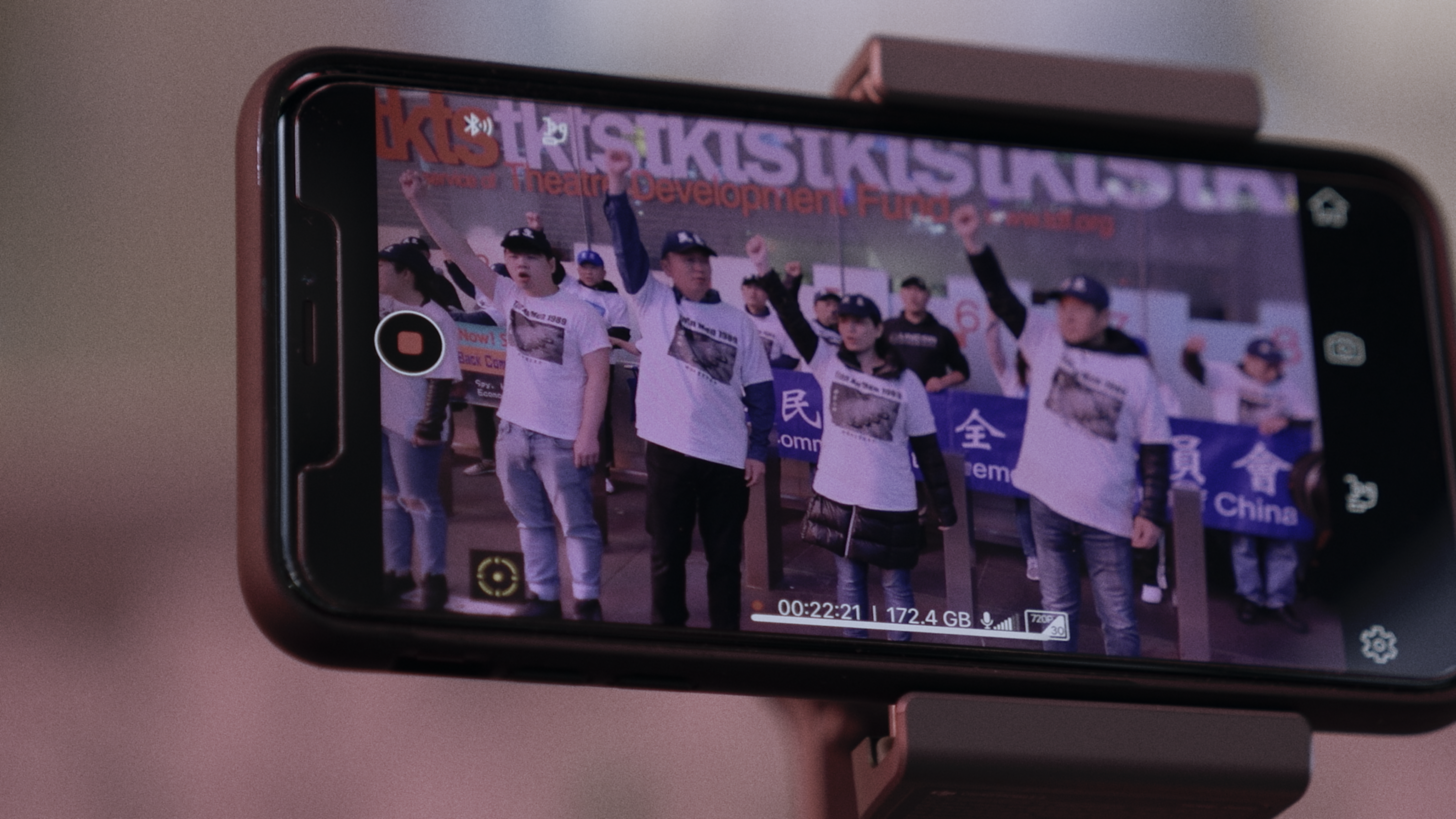
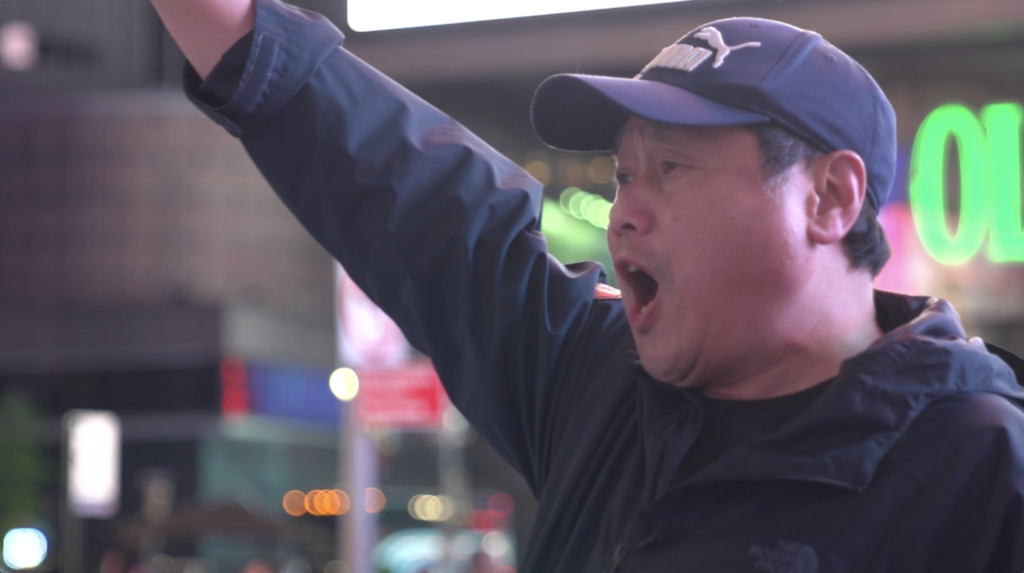
In the documentary, self-described “professional revolutionary” Juntao Wang, a primary organizer who was imprisoned after his involvement in the Tiananmen Square Massacre, organizes regular grassroots protests in New York City’s Times Square to show solidarity with protestors in China and express goals of overthrowing the CCP and ending authoritarian rule.
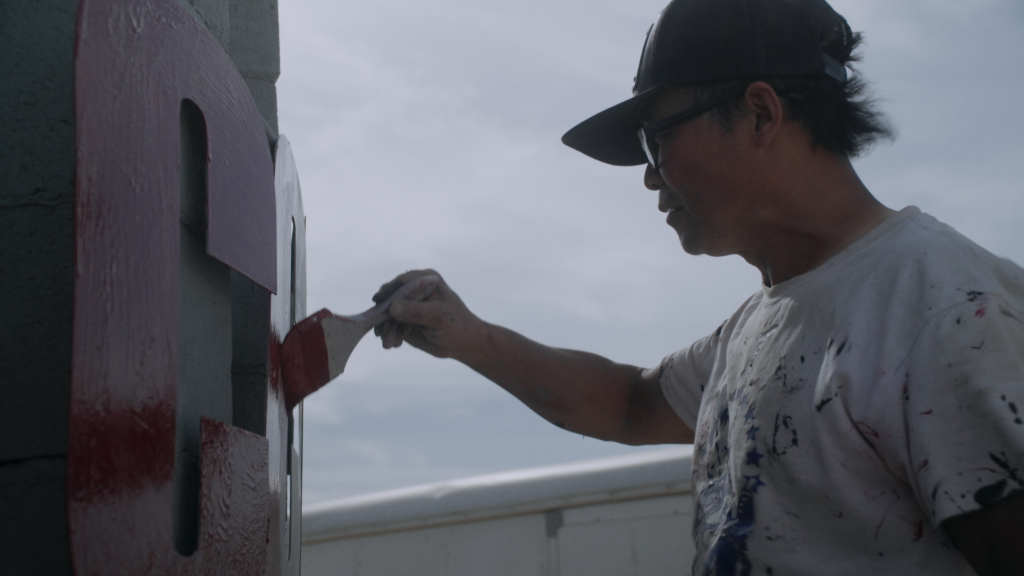
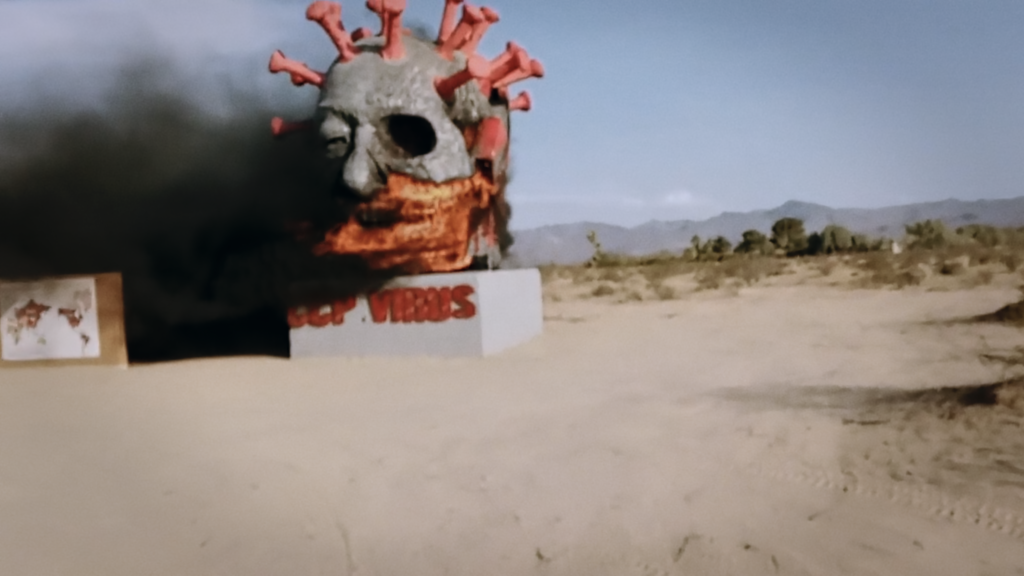
Artist and founder of Liberty Sculpture Park Weiming Chen builds human rights- and pro-democracy-themed sculptures in California. U.S. authorities said one of his sculptures was burned down in 2021 by agents working for the Chinese government, while another was removed from the campus of the Chinese University of Hong Kong following orders from university leadership.
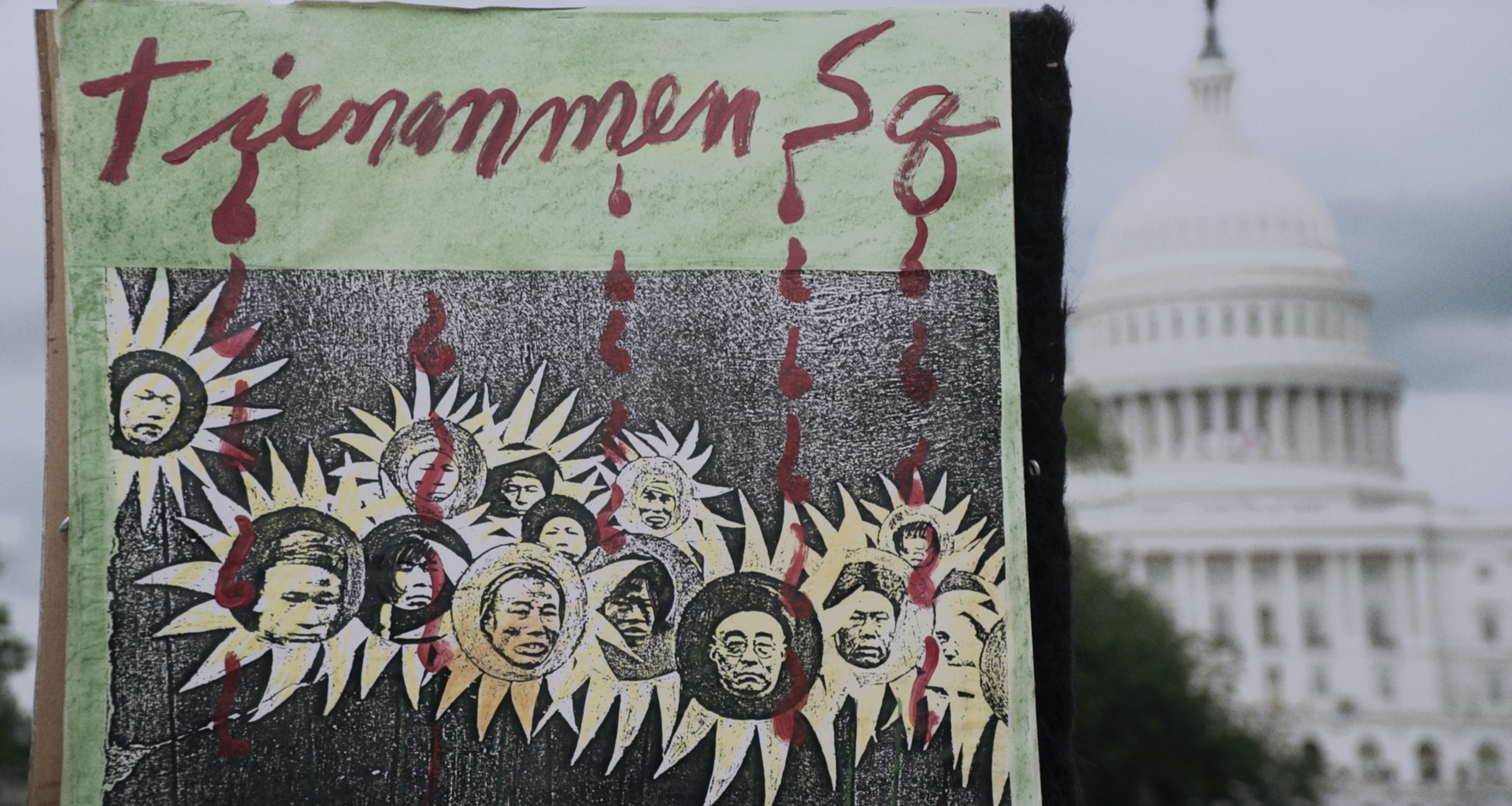
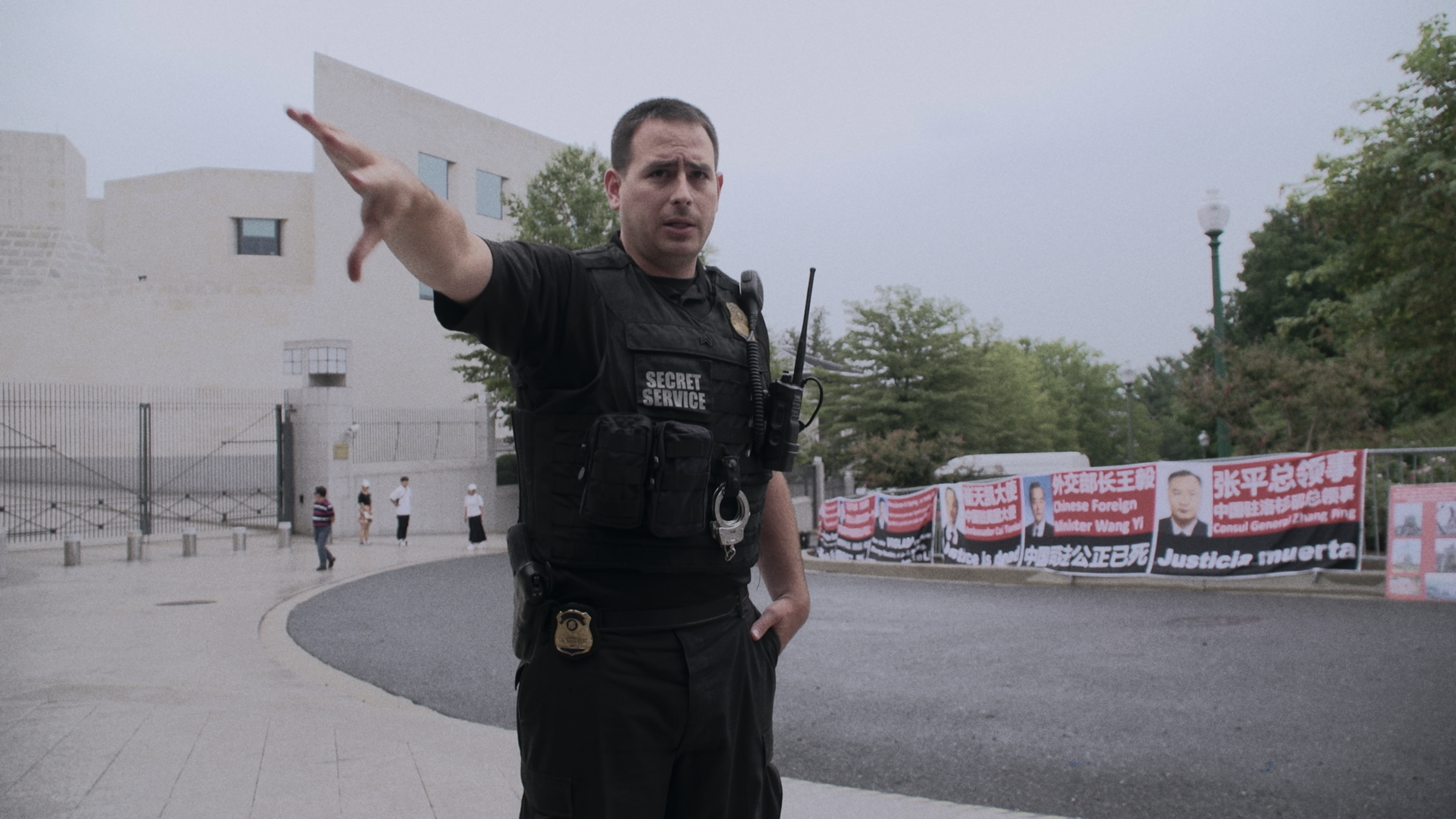
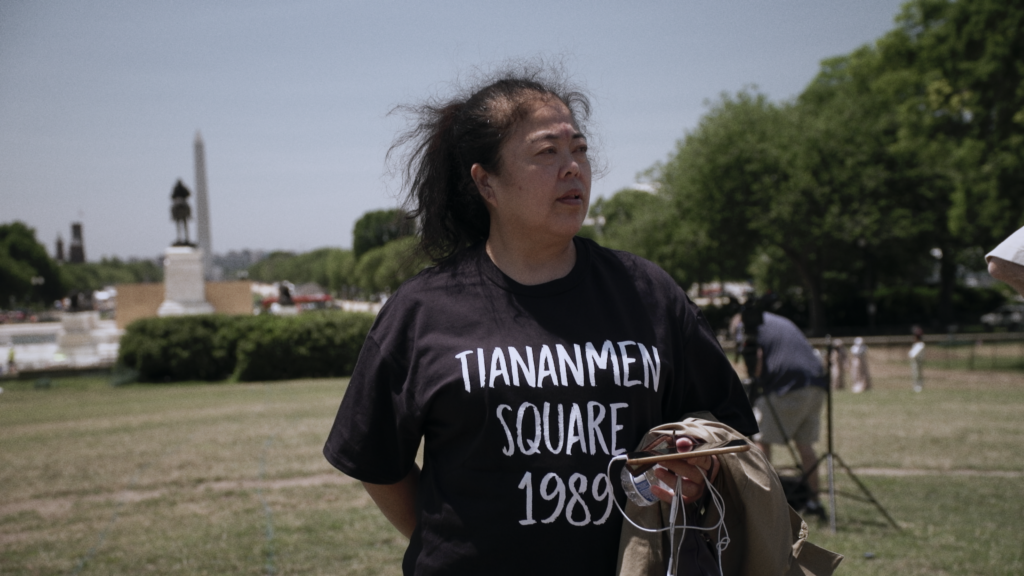
Asylum seeker Chunyan Wang lives in a tent outside the Chinese embassy in Washington, D.C., petitioning against the Chinese government for seizing her family’s house for commercial development without compensation.
The backdrop for dissidents
The People’s Republic of China (PRC) has been a single-party state since Communist leader Mao Zedong led its founding in 1949. The Chinese Communist Party (CCP) has controlled modern China for more than 70 years and long suppressed domestic pro-democracy activism, including mass protests related to issues like government corruption, censorship, women’s rights, and workers’ rights.
The CCP’s response to the 1989 Tiananmen Square protests in Beijing is perhaps its most visible crackdown on civilian demonstrations. The protests, which were part of a broader call for a more democratic government, lasted for weeks and culminated in the People’s Liberation Army killing thousands of protesters, including university students and other young people, and the imprisonment of protest organizers.
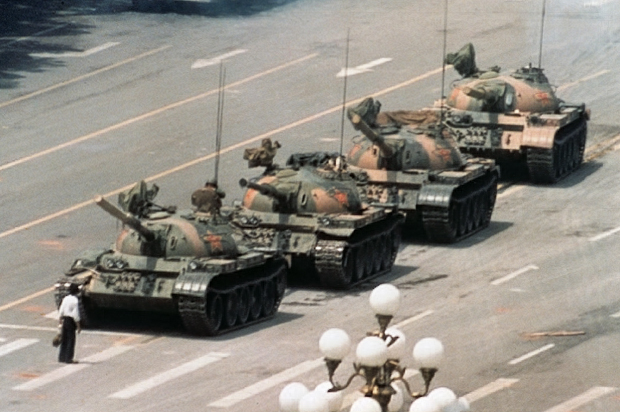
The photo of an unidentified man standing alone in front of a column of Chinese tanks—now known as “Tiananmen Square Tank Man”—was splayed across newspapers around the world, but the events were largely censored within China itself. Even today, search engines in China are designed to remove references to the massacre and filter out images related to the deaths of unarmed protesters.
The U.S. Congress later voted to impose economic sanctions against the PRC, citing human rights violations.
Despite the establishment of U.S.-China diplomacy in 1978 during the Carter administration, relations between the two countries deteriorated over time as each attempted to protect its economic and national security interests on the global stage.
Now, with the help of the Internet and advanced surveillance technology, the CCP’s efforts to silence opponents have reached beyond its borders.
Last year, the U.S. Department of Justice charged 40 alleged Chinese government agents with perpetrating “transnational repression schemes targeting U.S. residents whose political views and actions are disfavored by the PRC government.”
That includes accusations of creating fake social media accounts to harass dissidents, attempting to shut down their video chat meetings, and disrupting efforts to commemorate the massacre.
Building bridges
The PRC’s pursuit of dissidents abroad through online and physical harassment has sparked allegations of breaching state sovereignty. “It undermines the ability of other governments to keep people within their jurisdiction safe,” Eva Pils, a law professor at King’s College London, told the New York Times’ Tiffany May last summer after a Chinese human rights lawyer was arrested and extradited to the Sichuan province.
But even as the CCP’s long arm looms, many dissidents’ stories remain untold.
One of the reasons Chen wanted to make her film was the lack of media coverage around Chinese dissidents. She hopes to educate wider audiences about the importance of their stories.
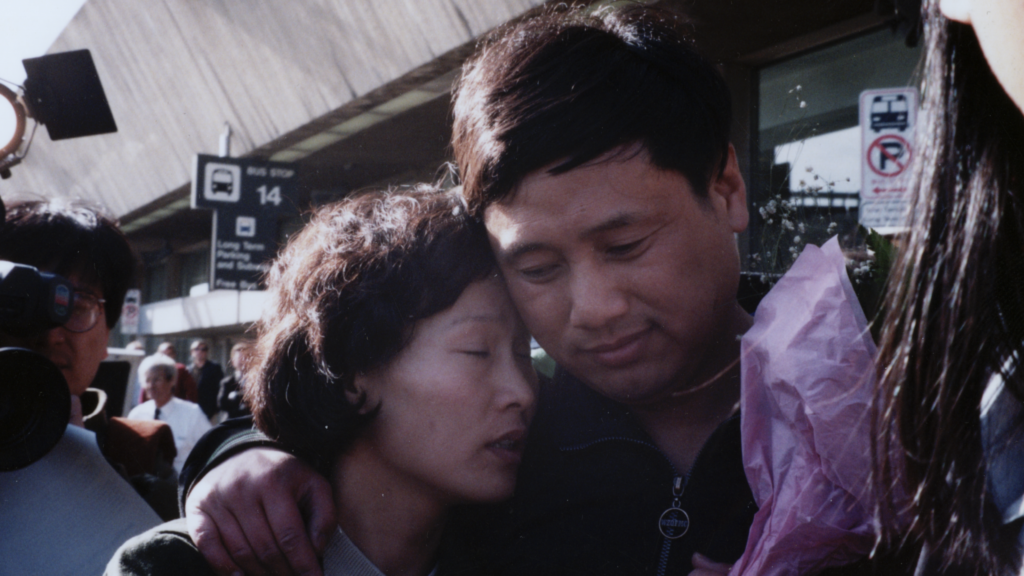
The subjects in her documentary told her they often feel marginalized even within larger Asian American communities. Due to language barriers, many struggle to engage with English speakers and can feel isolated, especially those who have been cut off from family. Chunyan Wang’s husband, for instance, divorced her after his boss threatened to fire him for his wife’s activism.
“I think they would like to have more support from the AAPI community,” Chen said. “I really want to do more community screenings to connect younger generations of Asian Americans with the characters and their generations.”
Finding common ground between the dissidents and AAPIs—especially younger generations—is key to achieving a higher level of integration and coalition-building, according to Chen. In some ways, the challenges they face are not unique to the dissidents, she noted, as many Asian Americans have family in authoritarian countries.
“They’re all fighting for democracy; they’re all fighting for basic rights, freedom of speech. They’re all fighting for equality,” Chen said. “I think that’s the first step in bridging the gap.”
Although the dissidents have not quite managed to bridge that gap, the ability to translate their messaging into English on social media would also help them reach AAPI communities and beyond, Chen added.
Bracing for the future
Current Chinese dissidents may not live to see a democratic China—a state where citizens would be granted freedom of speech, freedom of peaceful assembly, rule of law, and more—but they are driven by their strong belief in the movement and the potential of building a democracy that will benefit future generations.

“Perhaps I don’t have a big influence on China right now,” Juntao Wang says in the documentary. “But once political reform and transition start to happen in China, it will take decades to establish a mature democracy. Then the work I have built will be meaningful.”
As for Chen herself, future screenings of “Dissidents” await, as does her next project.
“I hope the audience will walk away and keep hope alive,” she said, adding that dates and locations for screenings will be updated on the C35 Films website.
“Dissidents” is funded by the New York Foundation for the Arts, Open Society Foundations, DC Commission on the Arts and Humanities, and Taiwan Foundation for Democracy.