




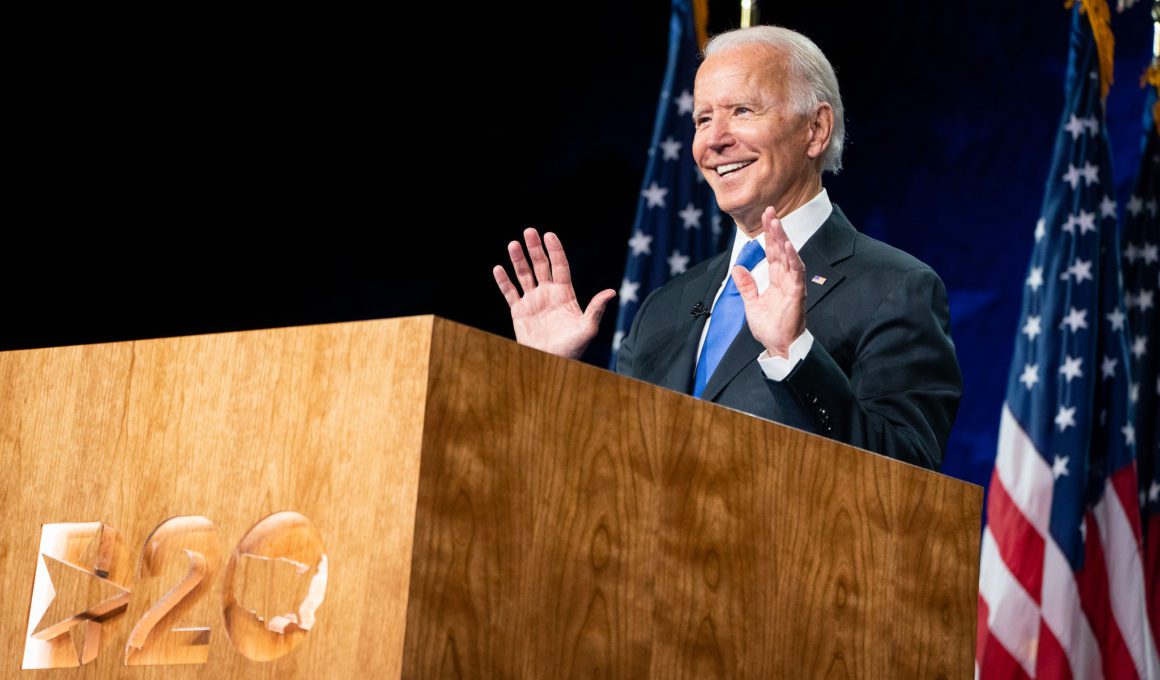
Democrat Joe Biden defeated President Donald Trump to become the 46th president of the United States on Saturday, after a grueling election marked by a worsening pandemic, economic devastation, and record turnout among Asian American and Pacific Islander communities.
"I am honored and humbled by the trust the American people have placed in me and in Vice President-elect Harris," Biden said in a statement. “With the campaign over, it’s time to put the anger and the harsh rhetoric behind us and come together as a nation. It’s time for America to unite. And to heal."
A veteran of the U.S. Senate who later served as vice president during the Obama administration, Biden launched his White House bid more than a year and a half ago. The President-elect argued that the "soul of the nation" was at stake and promised to heal the fractured country.
Nearly 70 percent of Asian American voters backed Biden, according to multiple exit polls and surveys conducted by AAPI groups, a stinging repudiation of President Trump's chaotic first term. With record numbers of AAPI businesses continuing to close, most Asian American voters indicated that they were highly energized this election cycle and that the COVID-19 pandemic, the economy, and health care weighed heavily on their electoral decision-making process.
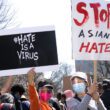
AAPI communities have also been grappling with thousands of coronavirus-related hate crimes, which some lawmakers say were fueled by President Trump’s repeated use of racist, anti-Asian rhetoric.
Biden moved quickly to rebuke Trump, and his efforts to court AAPIs went further than those of any other presidential campaign in modern history.
His campaign was the first to hire an AAPI national vote director during the Democratic primaries in September 2019, bringing on Amit Jani and tapping Olympic figure skater Michelle Kwan as surrogates director. Biden formally unveiled his "AAPIs for Biden" coalition in October 2019 with a kickoff event in Nevada.
A year later, the campaign's AAPI arm was touting unprecedented seven-figure paid media buys and targeted AAPI ethnic media outreach, including nationally televised ads, a 45-second digital spot titled “The America We Love” and op-eds in the World Journal, Viet Bao, and India West.
In August, Biden handed a victory to AAPI political groups by selecting Sen. Kamala Harris (D-California) as his vice presidential running mate, a move that represented a watershed moment for the South Asian American community. The daughter of Indian and Jamaican immigrants, Harris will now become the most powerful AAPI official in U.S. history.
In a final show of strength, more than 1,100 AAPI prominent community members threw their support behind the Biden-Harris ticket in early November, according to a list obtained by The Yappie.
“Never before has the AAPI community banded together with such unity and excitement in a presidential election,” Democratic National Committee AAPI Caucus Chair Bel Leong-Hong told The Yappie.
The campaign had at least 12 full-time AAPI directors, more than 14 affinity groups, and distributed materials in 19 AAPI languages.
As president, Biden is expected to strengthen Obama-era AAPI advocacy groups, including the President's Advisory Commission on AAPIs, the White House Initiative on AAPIs (WHIAAPI), and the Pacific Island Task Force.
Biden's agenda for AAPI communities, published during the campaign, makes the prosecution of hate crimes a priority for the U.S. Department of Justice. The Biden-Harris administration will also likely move quickly to reverse President Trump's immigration restrictions.
Biden has also pledged to direct federal agencies to "increase access to federal programs for AAPI individuals and families, including those who are limited English proficient" in order to serve "the myriad of challenges facing diverse AAPI communities."
Updated at 4:30pm ET on November 7, 2020.