







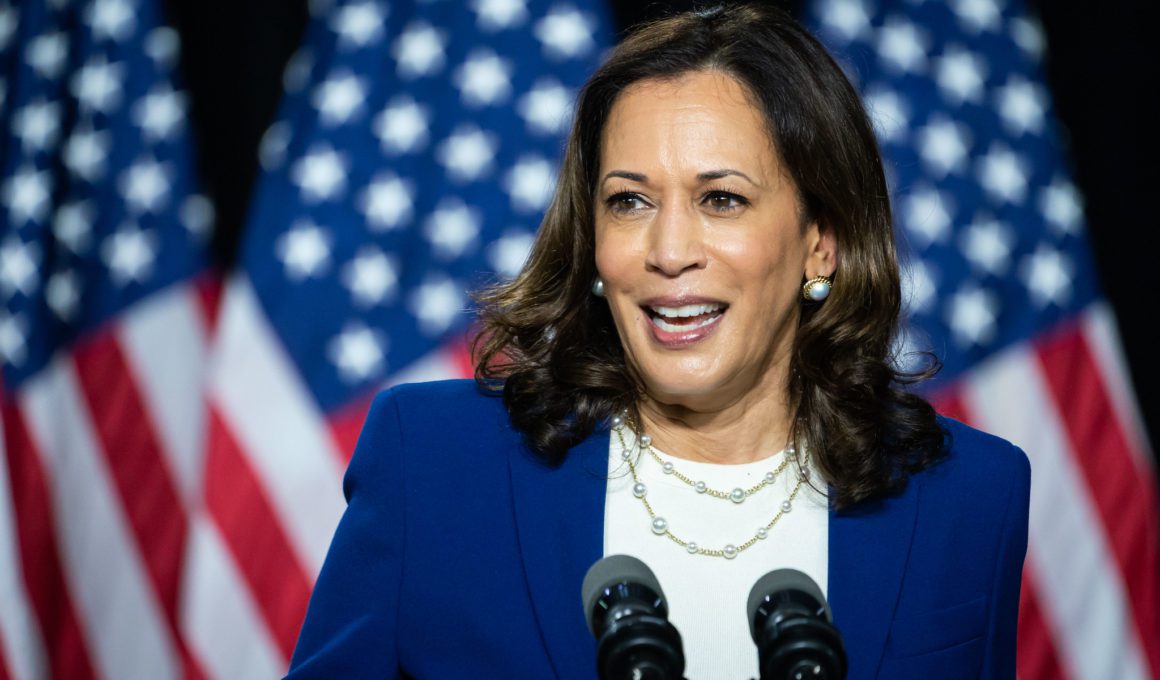
Kamala Harris solidified her place in U.S. history on Saturday, claiming the role as the nation's first Asian American, Black, and woman vice president-elect.
Harris, 56, became the first Asian American to appear on a national ticket after Joe Biden tapped her as his running mate in August, handing a victory to advocacy groups who said that "this decision will help galvanize the AAPI community."
The daughter of Indian and Jamaican immigrants and one of the most prominent South Asians in American politics, Harris has accumulated a long list of firsts throughout her years in public service.
Following two terms as the district attorney in San Francisco, Harris was elected California attorney general. She was the first woman, first Asian American, and first African American to serve as the state’s top law enforcement official.
Harris continued her streak on the federal level, becoming the first Indian American ever elected to the U.S. Senate in 2016. She currently serves alongside two other Asian American lawmakers—Sens. Mazie Hirono (D-Hawaii) and Tammy Duckworth (D-Illinois)—and is a member of the Congressional Asian Pacific American Caucus.
Harris made a splash last year after entering the Democratic presidential primaries, briefly taking up a frontrunner role and generating constant buzz in Indian American publications. She was one of the only candidates to roll out a detailed plan catering to AAPI voters.
Among her proposals for the AAPI community, Harris called for executive action to protect DACA recipients, the dismantling of language barriers, the revision of federal data collection to include ethnicity, and the creation of a $12 billion capital grant and technical support program to assist AAPI small businesses.
Harris also sought to highlight Native Hawaiian and Pacific Islander (NHPI) issues during her primary campaign, albeit briefly. In a November 2019 document reviewed by The Yappie, the California senator wrote that “federal policies and programs must carefully consider the unique circumstances of Native Hawaiians and Pacific Islanders,” and that federal agencies should develop action plans “to advance civil rights and educational and health equity” for NHPI communities.
Harris dropped out of the presidential race last December and endorsed Biden earlier this year. As the Democratic nominee for vice president, she became increasingly vocal as hate incidents targeting Asian Americans surged at the start of the COVID-19 pandemic.
In May, Harris introduced a Senate resolution that condemned “all forms of Anti-Asian sentiment as related to COVID-19” and slammed President Trump’s use of racist rhetoric on the campaign trail, warning in an Asian Journal op-ed that terms such as the “Chinese virus” have “recklessly put members of the AAPI community at risk.”
Harris also denounced the rise in anti-Asian violence at the AAPI Victory Fund’s AAPI Progressive Summit and on the Los Angeles Times’ Asian Enough podcast.
“Hate crime is not new … What is tragic is that it’s not ending,” Harris told hosts Frank Shyong and Jen Yamato. “There needs to be serious investigation of these cases, meaning that when someone reports it, they must be taken seriously, they must be given dignity through the process.”
At the Democratic National Convention in August, the freshman California senator’s acceptance speech centered on her mother Shyamala Gopalan, who immigrated to the U.S. from India and raised Harris and her sister largely on her own. “She raised us to be proud, strong Black women,” Harris said. “And she raised us to know and be proud of our Indian heritage.”
In a separate appearance at the Democratic National Committee's AAPI Caucus meeting, Harris noted that AAPI voters “could be the margin of victory in key battleground states this November."
"For years, the AAPI community’s voice has not been heard—its concerns ignored and stories forgotten," she said. "But this time it’s different."
Updates to come…