







Southeast Asian Americans (SEAA) are still struggling to access life-saving mental health care 45 years after resettling in the U.S., according to a new report from the Southeast Asia Resource Action Center (SEARAC).
Due to the legacy of war, genocide, and displacement in Southeast Asia, SEAAs experience higher rates of mental health challenges compared to the general population. But Asian American Pacific Islanders (AAPI) are already the least likely racial group to access mental health services.
How we got here
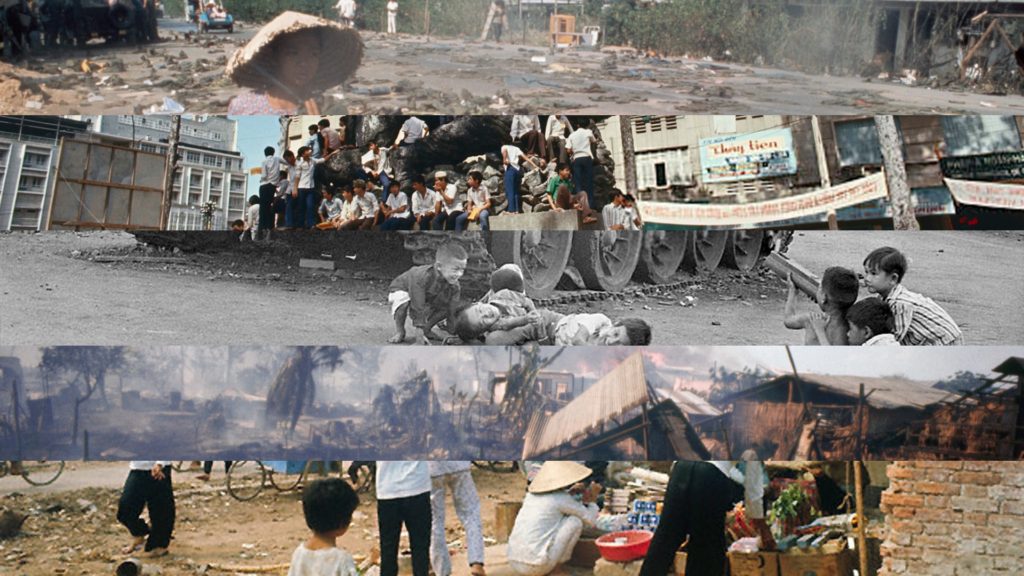
In the 1970s, Southeast Asian refugees began resettling globally to “escape genocide, persecution, and the spiraling aftermath of the Vietnam War,” SEARAC writes. More than one million immigrated to the United States, making Southeast Asians the largest refugee community to ever resettle in the country.
“Before coming to the U.S., I told my children, ‘Don’t be surprised if I have to start with menial jobs in the West because we need to adjust to a new life in the U.S., and we have to start very low in order to come up later,’” Le Xuan Khoa, SEARAC’s first Southeast Asian director, told NBC Asian America last year. Khoa, who was once vice president of the University of Saigon and a deputy minister in South Vietnam, started his first job in America as a cashier at 7-Eleven.
He was one of 123,000 Vietnamese refugees who came to the U.S. after the fall of Saigon in 1975. It kicked off a steady stream of Southeast Asian migration following the end of U.S. involvement in Vietnam, Cambodia, and Laos (though America’s footprints never faded).
Their new home wasn’t very welcoming.
An aftereffect of the war, Americans treated SEAAs as the enemy, forcing refugees to grapple with hostility and racism on a daily basis. Many had no choice but to reside in poverty-stricken neighborhoods that regularly struggled with violence, racial tensions, and lack of community funding. Resettlement agencies largely left SEAA refugees to cope on their own. They faced multifaceted stressors that shifted “cultural norms and family structures as forms of survival,” SEARAC writes.
“We were small, malnourished, and poor,” Chanda Kun, a formerly incarcerated refugee, said of his childhood in Los Angeles, where his family resettled fleeing the Khmer Rouge. “It made for easy targets for the people around us to bully and pick on us. We all had to stick together to survive.”
“As we grew older, it was so difficult to see just how broken all of our elders were; the trauma they faced is unfathomable to most people,“ he added. “All the refugees’ kids I grew up with knew they had to mature quickly and help to care and provide for our families to ease the burden of our parents who had already been through so much.”
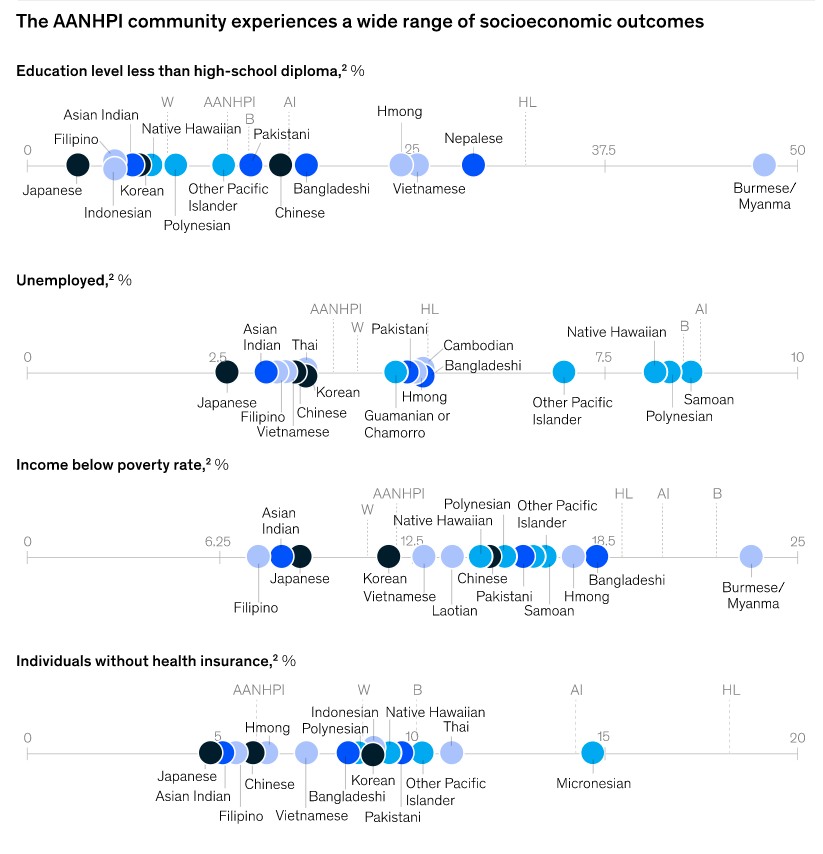
Today, SEAAs number over 2.5 million throughout the United States, with the largest population—almost one million—residing in California. The last year has imposed new burdens: exposure to the coronavirus, economic instability, separation from family and friends, and an ugly spike in anti-Asian hate.
Nearly 60% of Asian American adults say reports of anti-Asian hate impact their mental health. Crisis Text Line, a nonprofit that offers free mental health support via text, reported a 39% increase in texts from Asians between the first week of January and the last week of March 2020—the biggest spike during that period occurred the week former President Donald Trump began using the phrase “Chinese virus.”
The rhetoric has spun off into hate against Southeast Asians. High-profile incidents have involved three Burmese family members—including their 6- and 2-year-old children—who were stabbed in Texas, a 61-year-old Filipino man whose face was slashed from ear to ear in New York City, and an 84-year-old Thai immigrant who was pushed to his death in the Bay Area.
Despite the intensifying need for care, the Democratic-controlled Golden State has not implemented infrastructure that can address the barriers, SEARAC says. The current mental health system is “not providing sufficient support to SEAAs to access and utilize critical mental health services,” the report states. “Even after 45 years of resettlement, many Southeast Asian refugees have yet to receive the appropriate care to heal from the trauma they have experienced.”
That’s cause for alarm.
inherited trauma
SEAAs experience post-traumatic stress disorder (PTSD) at higher rates than the general population. One study found that 70% of Southeast Asian refugees in mental health treatment are diagnosed with PTSD. 62% of Cambodian refugees suffer from PTSD while 51% struggle with depression—up to 17 times the national average for adults. The Hmong community is also “at least twice as likely” to experience some kind of mental health issue—especially major depression, PTSD, and anxiety disorders.
“The range of loss and grief that SEAAs experience often makes it difficult to conceptualize and verbalize, making it difficult to address and diagnose,” SEARAC writes. “There are normative losses and the accompanying grief associated with losing people, however SEAAs also experience an ambiguous loss that is difficult to articulate and identify as loss and grief.”
This may take the form of:
- A physically absent but emotionally present loss due to a lack of proof of death, such as family separation during war and deportation.
- A loss that occurs when a loved one is physically present but emotionally absent due to dementia, depression, PTSD, and homesickness (a longing for the country they immigrated from).
SEARAC’s survey was conducted in 2019 as part of a campaign to destigmatize mental health issues in the community. Focusing on California—home to 36% of the SEAA population—SEARAC collected surveys through an online platform, collaborating with SEAA-serving groups to transcribe and translate survey responses. Despite its small sample size—247 SEAA respondents—the survey provides a snapshot of the community’s needs as they pertain to the current moment, when Asian Americans’ mental health is at higher risk than ever.
Over 60% of respondents said their mental health conditions are related to their experience with trauma and intergenerational trauma—linked to refugees’ immense grief over loss of home, lack of community, and separation from friends and family who may have been left behind or killed.
“It was just like heavy rain, but it was the anguish—the anguish of people, and the fear, and the terror.”
—Dr. Carolee Tran, remembering the panicked cries of masses left behind when she fled Vietnam as a child
The intergenerational nature of SEAAs’ acutely-felt losses means children and adolescents grow up mired in it. Intergenerational trauma—trauma passed on through generations within families and communities—can lead to low self-esteem, cognitive or mood changes, and challenges with interpersonal relationships for SEAA youth. Their parents' psychological distress becomes their own as they weather the impacts of PTSD and mental illness. “I remember when I was younger, … my father wasn’t able to sleep at night due to his flashbacks of the war,” one SEAA told SEARAC in another survey. “This went on for years.”
Another account from Maly Phommavong, a Lao and Thai language interpreter for the California judicial court, details her father’s aggressive and verbally abusive behaviors as a result of PTSD. A former Laotian government official and reeducation camp survivor, he would patrol the house with guns at night, deadbolting doors and turning to alcohol.
The lasting effects worsen with each generation, triggering a range of psychiatric symptoms, increasing vulnerability to stress, and contributing to internal and external trauma symptoms like substance use and aggression. A study on Cambodian refugee families found that silence from family survivors impacts children’s sense of belonging and continues a pattern of avoidance. Stressors become magnified for LGBTQ+ Southeast Asian Americans, who have to grapple with their sexuality on top of their racial/ethnic identity. Research has shown that children of refugees are more likely to engage in delinquent behaviors and are often intimately familiar with violence—including family and/or partner violence.
As adolescents grow older, these symptoms lead to higher rates of interaction with law enforcement, according to SEARAC, which can in turn cause repercussions related to immigration.
Immigration, a double-edged sword
Deportation is a looming shadow for undocumented SEAA immigrants. Since the mid-1990s, the U.S. has issued final removal orders for roughly 16,000 Southeast Asian refugees.
Risma Fadersair spent 2018 fighting for her husband’s release from U.S. Immigration and Customs Enforcement. After exhausting a list of pro bono lawyers, the Indonesian immigrant turned to a private lawyer.
He asked for $4,000 upfront.
“I said to him, ‘Even, you can kill me, I don’t have that much,’” she told Intelligencer.
She had to reassure her children that Daddy would come back despite the lack of legal assistance. “Without him, right now, it’s just my half missing,” Fadersair said. He had been the family’s main income provider. “But the thing is, if I keep mourning like this, how about my kids?”
SEAAs experienced a rise in detentions and deportations under Trump, according to NBC Asian America. As recently as March, advocates attempted to prevent a flight that would deport 33 Vietnamese immigrants and refugees.
It remains a constant source of anxiety.
Barriers to care
Many SEAAs learn to take the punches when they come, so stigma is itself one of the biggest obstacles to mental health care. That's a problem within the larger AAPI community, too, and it contributes to hesitation when health care access is already difficult and expensive. The cultural stigma is so strong many SEAAs often feel the need to hide their need for therapy on psychiatric medication.
“People come to me, they share with me, they ask what do you do, what doctor do you use, how do you talk to the kids—but they don’t want to show their face in public,” Anh Dao Huynh, a mental health advocate who works in Vietnamese communities, told California Health Report in 2017. “If they are in public, then people will think your family is a bad family or something like that. Because of the stigma, they’re afraid.”
Of the directly impacted respondents in SEARAC's survey—defined as an SEAA with a mental health condition—70% said they have accessed mental health services. 35% have not, while 4% chose not to disclose.
75% of directly impacted individuals, however, said they were never able to receive appropriate mental health services. 15% of respondents indicated a delay in services received thus far. Harmful sessions and/or lack of access to culturally appropriate services frequently led to declining mental health or regression.
The multitude of barriers discouraged most directly impacted individuals from seeking (further) care.
“I remember feeling judged and attacked by them and not willing to be fully vulnerable around them. I feared they wouldn’t understand. One of them made me cry, and the appointment lasted less than 10 minutes—I remember feeling wrong on my journey to mental healing and confused,” one respondent wrote. “I had such a bad experience that I couldn’t go back for my one-on-one sessions for three weeks in fear of running into her again.”
"I felt like that one encounter made me regress. These two people made me feel judged and instead of acknowledging my want to be better, they made me feel like I wasn’t doing enough."
—SEARAC survey respondent
Correspondingly, cultural and/or linguistic barriers, as well as lack of knowledge on how to access services, were listed as top obstacles for those who haven’t accessed mental health services. 77% of respondents said lack of culturally appropriate services and providers discouraged clients from seeking (further) care. 29% reported a lack of intersectional and intergenerational services and providers. One in two Asian Americans suffering from mental illness will not seek help due to a language barrier, according to the APA Commission of Ethnic Minority Recruitment, Retention, and Training.
Racism also plays a role. 33% of respondents said their mental health conditions were a result of discrimination and pressures to assimilate. 47% of SEAAs have limited English proficiency (LEP), a higher rate than Asian Americans overall as well as other racial groups.
“Being LEP determines which resources and services are accessible, what jobs LEP are able to pursue, how much you are likely to earn, and how likely you will be harassed,” according to the report.
But the limiting state definition of a threshold language has left minority SEAA groups like the Hmong and Iu Mien to run up against even greater cultural and linguistic barriers. Hmong is one of the top three languages spoken in Butte County, but it isn’t considered a threshold language, which means California counties are not required to translate materials or retain interpreters in Hmong.
60% of respondents said their own mental health suffered as a result of their relationship with an individual who was unable to seek care. “Mental health challenges have a ‘ripple effect’ on families, creating tension, uncertainty, troubled emotions, and big changes in how people live their lives,” SEARAC writes.
planning for the future
Even though Asian Americans are the fastest-growing racial group, making up roughly 6% of the U.S. population, Asian American therapists represent only 4% of the profession. Overall, approximately 70 AAPI mental health providers are available for every 100,000 AAPIs in the United States.
In California, Laotian, Cambodian, and Hmong Americans have the lowest ratios of native language-speaking physicians and nurses compared to all other racial/ethnic groups.
Despite the challenges, 55% of directly impacted respondents have successfully accessed mental health services. 21% of these SEAAs cite healing-centered care as effective models. Advocates have urged communities to shift from trauma-informed care toward healing-centered care, an effort to help SEAAs engage with collective trauma and histories rather than rely on an individualistic model of mental health.
That doesn't mean SEAAs aren't working toward resilience on their own.
“Unique to my culture, being a hilltribe, the Iu Mien were always the minority and had no homeland,” says May Saechao, a Iu Mien American advocate who has worked to provide culturally competent services for her community. “We were persecuted by the majority and endured constant hardships, fleeing from country to country to seek refuge, and forcing us to frequently adapt and change. In the process of integration and assimilation, we forfeited a lot with the culture to meet some of the standards and practices of the communities in which we live. We have been through wars, poverty, famine, natural disasters, and other several other types of crises, but yet we still survived.”
“Our continued existence today in many countries around the world shows how incredibly resilient we really are despite all the odds.”
—May Saechao, lu Mien community organizer
As the U.S. continues its COVID-19 vaccine rollout, SEAAs shouldn't have to struggle on their own. The pandemic wrought devastation for everyone—but particularly marginalized groups like the SEAA community. After a year of devastation, SEAAs will need all the help they can get as they recover from COVID-19 and economic collapse.
But mental health care is “not appropriate and accessible to SEAAs if not all areas of culture, intersectionality, intergenerational factors, healing, and language are considered,” SEARAC writes.
It’s time for California—and the rest of the nation—to wake up.